


Waking up at 3 a.m. unable to catch your breath is one of the most frightening experiences a person can have. So is lying down to sleep and suddenly feeling like you can’t take a full breath. So is the slow creep of nighttime breathlessness that’s been getting worse over weeks and you’ve been trying not to think about.
Shortness of breath at night — whether it’s sudden, gradual, mild, or severe — is your body telling you something. Sometimes that something is benign. Sometimes it’s a sign of a serious medical condition that needs evaluation soon, or even tonight. The question this article answers is: what causes nighttime shortness of breath, how do you tell the difference, and when do you come to ER of Dallas?
If you’re reading this while symptomatic, skip to the next section — we put the warning signs first for a reason.
📍 ER of Dallas: 4535 Frankford Rd, Dallas, TX 75287
📞 +1 214-613-6694 — open 24/7
Why Nighttime Breathing Is Different
Your breathing changes when you lie down and when you sleep, and a few physiological shifts explain why some conditions get worse specifically at night:
- Body position. Lying flat shifts fluid in your body upward toward the chest, which can stress the heart and lungs.
- Lower cortisol at night. Cortisol is a natural anti-inflammatory; its levels drop overnight, which can let asthma and airway inflammation worsen.
- Cooler airways. Bedroom air is often cooler and drier, which can trigger bronchospasm in sensitive airways.
- Allergen exposure. Dust mites, pet dander, and bedding allergens are concentrated where you sleep.
- Sleep itself. During sleep, muscle tone in the throat decreases, which can collapse the airway in people with sleep apnea.
- Acid reflux. Lying flat lets stomach acid travel up the esophagus, which can irritate airways and trigger bronchospasm.
Understanding these mechanisms helps explain why daytime breathing can feel fine while nighttime breathing feels labored — and why the causes are often very different from what you’d suspect during the day.
🚨 Emergency: When Nighttime Shortness of Breath Needs the ER NOW

Before we explore causes, here are the symptoms that mean you should not wait until morning. Call 911 or come straight to ER of Dallas if your nighttime shortness of breath comes with any of these:
- Chest pain, pressure, tightness, or discomfort — especially radiating to the jaw, neck, shoulder, or arm
- Coughing up pink, frothy, or blood-tinged sputum
- Inability to lie flat — you have to sit up to breathe (this is called orthopnea)
- Waking up gasping for air after being asleep (paroxysmal nocturnal dyspnea, or PND)
- Blue or gray lips, fingernails, or face (cyanosis)
- Severe difficulty speaking in full sentences
- Rapid heart rate that feels irregular
- Significant swelling in the legs, ankles, or feet
- Sudden onset of shortness of breath without obvious cause, especially after recent surgery, long travel, or prolonged immobility (rule out pulmonary embolism)
- Confusion, dizziness, or feeling faint with the shortness of breath
- High fever combined with new shortness of breath
- Sudden severe shortness of breath in someone with known heart disease or COPD
- Use of accessory muscles (neck muscles visibly straining) or visible chest retractions
When in doubt, come in. Nighttime shortness of breath that’s severe, worsening, or comes with any of the above symptoms is exactly what an emergency room is for. Don’t spend the night Googling — get evaluated.
Heart-Related Causes — The Ones People Often Miss
When most people think “shortness of breath at night,” they think asthma or anxiety. But for many adults — especially over 50 — nighttime breathing problems are the first sign of a heart issue. Two patterns are particularly important:
Orthopnea — shortness of breath when lying flat. If you’ve started needing two, three, or four pillows just to breathe comfortably at night — or you’ve started sleeping in a recliner because the bed feels suffocating — this is a classic sign of heart failure. When your heart can’t pump efficiently, lying flat causes fluid to shift toward the lungs, creating the sensation of drowning slowly. Ask yourself: how many pillows did I use a year ago vs. now?
Paroxysmal nocturnal dyspnea (PND) — waking up gasping. Sudden episodes where you wake up 2 to 4 hours into sleep, sometimes choking or gasping, sometimes needing to throw open a window or sit at the edge of the bed to breathe. PND is one of the strongest signs of underlying heart failure, and it often appears months before other obvious cardiac symptoms. Most people who experience PND don’t know what it is — and don’t bring it up with a doctor.
Other cardiac causes:
- Atrial fibrillation (AFib) — irregular heart rhythm that often becomes noticeable at night and can cause shortness of breath, palpitations, and fatigue
- Coronary artery disease and silent heart attack — especially in women, diabetics, and elderly patients, where chest pain can be subtle or absent and shortness of breath is the main symptom
- Heart valve disease — leaky or stiff heart valves can cause progressive nighttime breathlessness
- Pericardial effusion — fluid around the heart, often presenting with breathing difficulty
If you have risk factors for heart disease — high blood pressure, diabetes, high cholesterol, smoking history, family history of heart disease, or age over 50 — nighttime shortness of breath should be evaluated promptly. At ER of Dallas, we do EKG, chest X-ray, BNP/NT-proBNP (a blood marker for heart strain), and troponin testing on-site, with results in minutes.
Sleep Apnea — The Most Common Undiagnosed Cause
Obstructive sleep apnea (OSA) affects an estimated 25 million American adults — and the majority don’t know they have it. It happens when the soft tissues at the back of the throat collapse during sleep, repeatedly blocking the airway. Each blockage causes a brief drop in oxygen and a micro-awakening you may not remember.
Signs of sleep apnea:
- Loud, chronic snoring (often noticed by a partner)
- Witnessed pauses in breathing during sleep
- Waking up gasping or choking
- Morning headaches
- Daytime sleepiness despite “sleeping” 7+ hours
- Dry mouth or sore throat on waking
- Mood changes, irritability, difficulty concentrating
- Frequent nighttime urination (nocturia)
Risk factors:
- Excess weight (especially neck circumference greater than 17 inches in men, 16 inches in women)
- Age over 40
- Male sex (though common in women, especially post-menopause)
- High blood pressure, type 2 diabetes
- Family history of sleep apnea
- Anatomy: large tonsils, narrow airway, recessed jaw
Sleep apnea isn’t typically an ER diagnosis — it requires a sleep study (home or in-lab) and follow-up with a sleep specialist. But if your shortness of breath is happening at night and your partner has been mentioning snoring or breathing pauses for years, that’s the diagnosis to push for with your primary doctor. Untreated sleep apnea increases the risk of heart attack, stroke, atrial fibrillation, and motor vehicle accidents from daytime sleepiness.
Nighttime Asthma
Asthma often gets worse at night — to the point that nocturnal worsening is one of the clinical criteria doctors use to classify asthma severity. The reasons:
- Cortisol drops overnight, reducing the body’s natural anti-inflammatory protection
- Airway temperature drops, triggering bronchospasm in sensitive lungs
- Lying down lets sinus drainage and reflux irritate the lower airways
- Bedroom allergens (dust mites, pet dander, mold) concentrate at the sleep area
- Vagal nerve activity peaks at night, which can constrict airways in some patients
Common signs of nocturnal asthma:
- Waking up coughing
- Wheezing at night that’s absent during the day
- Chest tightness on waking
- Needing your rescue inhaler at night or in the early morning
If you have known asthma and your nighttime symptoms are worsening — or if you’ve never been diagnosed but you have wheezing or persistent nighttime cough — see our companion articles on pollen-triggered asthma attacks and seasonal allergy breathing problems for full detail.
GERD and Silent Reflux
Acid reflux is often thought of as heartburn, but a significant percentage of people with GERD (gastroesophageal reflux disease) have respiratory symptoms instead — sometimes without classic heartburn at all. This is called “silent reflux” or laryngopharyngeal reflux (LPR).
At night, lying flat lets stomach acid travel up the esophagus. The acid can irritate the airways directly or trigger a reflex bronchospasm even without reaching the lungs. This causes:
- Coughing at night, especially after going to bed or in the early hours of the morning
- Wheezing or chest tightness without obvious allergen exposure
- Sore throat or hoarseness in the morning
- Sour taste in the mouth on waking
- A feeling of something stuck in the throat (globus sensation)
- Frequent throat-clearing
GERD-driven nocturnal breathing problems often respond to elevating the head of the bed, avoiding late meals, and treating the reflux itself with medication. Untreated GERD can also damage the esophagus and contribute to chronic asthma worsening.
Anxiety and Panic Attacks at Night
Anxiety attacks — especially nocturnal panic attacks — are a real and common cause of shortness of breath at night. They can wake you up suddenly with a feeling of suffocation, racing heart, sweating, and a sense of doom. They’re terrifying and physically real.
But here’s the critical point: anxiety should be a diagnosis of exclusion. The symptoms of a panic attack overlap significantly with the symptoms of a heart attack, pulmonary embolism, asthma attack, and other medical emergencies. If this is your first significant nighttime breathing episode, or if anything feels different from your typical anxiety pattern, get evaluated — don’t self-diagnose anxiety.
How panic attacks typically present:
- Sudden onset — peak intensity within 10 minutes
- Often resolve within 20–30 minutes
- Hyperventilation, tingling in hands and around the mouth
- Sense of doom or impending catastrophe
- Often a recognizable pattern in patients with known anxiety disorders
Panic attacks are real, treatable, and not a reason for shame — but they’re also not a diagnosis to assume in the middle of the night when something feels physically wrong. If you have any of the red flags listed earlier in this article, come in.
Other Causes of Nighttime Shortness of Breath
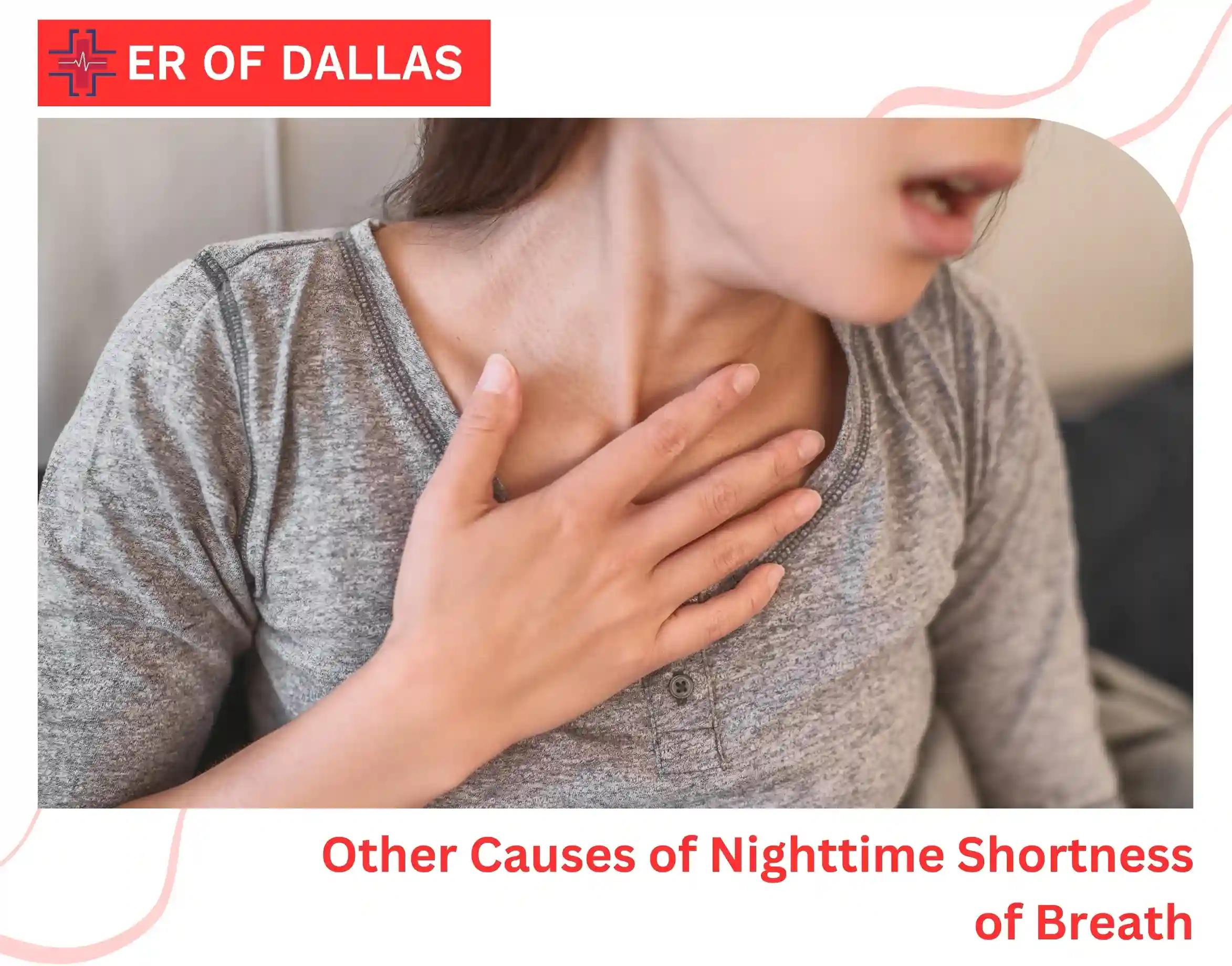
Pneumonia. Lung infection often presents with worsening shortness of breath, cough (sometimes productive), fever, and chest discomfort. Often gets worse at night when lying down. Needs evaluation — antibiotics may be required.
Pulmonary embolism (PE). A blood clot in the lung — a life-threatening emergency. Risk is higher after recent surgery, long travel (flights over 4 hours), prolonged immobility, pregnancy, hormone use, or known clotting disorders. Often presents with sudden shortness of breath, chest pain with breathing, fast heart rate, and sometimes coughing up blood. Call 911 or come immediately.
COPD exacerbation. Anyone with known COPD can have nighttime flares. Increased shortness of breath, increased cough, increased mucus, color changes in mucus — all signs of an exacerbation needing treatment.
Allergies and allergic rhinitis. Bedroom allergens (dust mites, pet dander, mold) and seasonal allergens can cause nighttime nasal congestion and breathing difficulty. See our seasonal allergy breathing problems article for full detail.
Anemia. Low red blood cell count reduces the blood’s oxygen-carrying capacity. Often presents with shortness of breath on exertion that can worsen at night.
Thyroid disease. Both overactive and underactive thyroid can cause shortness of breath patterns, though usually with other symptoms (weight change, mood change, energy change).
How Doctors Figure Out What’s Causing It
At ER of Dallas, evaluation of nighttime shortness of breath is systematic and fast. Here’s what we do:
- Detailed history — when did it start, what makes it better/worse, lying flat vs. sitting up, associated symptoms, your medical history and medications
- Physical exam — listening to the heart and lungs, checking for leg swelling, evaluating breathing pattern and oxygen saturation
- Pulse oximetry — measures blood oxygen saturation
- EKG — looks for heart rhythm issues, signs of heart strain, evidence of a current or prior heart attack
- Chest X-ray — identifies pneumonia, fluid in the lungs (pulmonary edema from heart failure), or other lung findings
- Blood tests — including BNP or NT-proBNP (markers of heart strain), troponin (heart muscle damage), CBC, and basic metabolic panel
- CT scan when indicated — to rule out pulmonary embolism or complicated pneumonia
- Sometimes additional testing — like a bedside ultrasound (echocardiography) for heart function assessment
All of this can be completed on-site, with results in minutes. By the end of an ER visit, you typically have a clear answer about what’s causing your shortness of breath and a plan for what to do next — whether that’s discharge home, specialist referral, or hospital admission for further care.
When to Come to ER of Dallas vs. Wait for Primary Care
| Situation | Where to Go |
| Severe shortness of breath, chest pain, blue lips, inability to lie flat, waking up gasping, swelling in legs, sudden onset with recent surgery/travel — or any red flag from earlier in this article | 🚨 Call 911 or come straight to ER of Dallas |
| Moderate nighttime breathing trouble that’s new, progressive, or coming with worrying signs (orthopnea, leg swelling, persistent cough) — but not severely acute | Come to ER of Dallas — proper evaluation tonight is better than waiting |
| Mild, stable nighttime breathing trouble in someone with known asthma, allergies, or chronic conditions, responding to usual treatment | Manage at home, see your primary care doctor or specialist in the next few days |
When you’re unsure, lean toward coming in. Nighttime breathing problems are exactly the kind of symptom that should be evaluated rather than “watched.”
What to Do While You’re Symptomatic at Night

If you’re reading this while struggling to breathe and trying to decide whether to come in:
- Sit upright. Don’t lie flat. Lean slightly forward if it helps.
- Stay calm if possible. Slow, deliberate breathing through pursed lips can ease the work of breathing.
- Open a window or get to cooler air if your bedroom feels stuffy.
- If you have a rescue inhaler and known asthma, use it as prescribed.
- Check your pulse oximeter if you have one. Reading below 92% is an ER visit.
- Don’t drive yourself if symptoms are severe — call 911 or have someone else drive.
- If you have any of the red flags listed earlier, come to ER of Dallas now: +1 214-613-6694.
Prevention and Long-Term Management
Once the immediate issue is resolved, address the underlying cause:
- See your primary care doctor for a complete workup if nighttime shortness of breath is new or persistent
- Push for a sleep study if you have any signs of sleep apnea — most adults with OSA never get diagnosed
- If you have known heart disease, track your symptoms daily — pillow count, leg swelling, weight gain — these are signs of decompensation
- If you have asthma, work with your doctor on a written asthma action plan and stay on controller medications
- Treat GERD if you have it — elevate the head of the bed, avoid late meals, use medication as needed
- Address bedroom allergens — wash bedding weekly in hot water, use dust mite covers, HEPA filtration, keep pets out of the bedroom if you’re allergic
- Maintain a healthy weight — excess weight worsens nearly every cause on this list
- Stop smoking and avoid secondhand smoke
- Treat anxiety if it’s contributing — therapy, medication, lifestyle changes all help
Frequently Asked Questions
(Implement FAQPage schema on this section)
Q: Why does shortness of breath happen at night specifically?
A: Multiple reasons: lying flat shifts body fluid toward the chest, overnight cortisol levels drop (reducing the body’s natural anti-inflammatory protection), airway temperature drops, sleep relaxes throat muscles (worsening apnea), and bedroom allergens or acid reflux can irritate airways. The underlying cause matters — different mechanisms lead to different treatments.
Q: What is orthopnea, and is it serious?
A: Orthopnea is shortness of breath that gets worse when you lie flat — meaning you need to prop yourself up with pillows or sit up to breathe comfortably. It’s often a sign of underlying heart failure and deserves prompt medical evaluation. If you’ve started needing more pillows than usual to breathe at night, see a doctor.
Q: What is paroxysmal nocturnal dyspnea?
A: Sudden episodes of shortness of breath that wake you from sleep, typically 2 to 4 hours into the night, often with a sense of suffocation, sometimes coughing or gasping. People often need to sit at the edge of the bed or open a window to get relief. PND is a classic sign of heart failure and should be evaluated promptly.
Q: Could my shortness of breath be a heart attack?
A: Possibly — especially in women, diabetics, and older adults, where heart attacks can present without classic chest pain. Shortness of breath alone, especially if new, worsening, or accompanied by sweating, nausea, jaw or arm discomfort, or extreme fatigue, can be a heart attack equivalent. Don’t self-rule-out. Come in or call 911.
Q: Will my insurance cover an ER visit for shortness of breath?
A: Under the federal No Surprises Act, your insurance is required to process emergency visits at your in-network benefit level. ER of Dallas accepts most major insurance plans. We don’t accept Medicare, Medicaid, CHIP, or TRICARE.
Q: Should I just wait until morning and call my doctor?
A: Depends on the symptom. If it’s severe, new, progressive, or accompanied by any of the red flags in this article — come in tonight. Don’t “wait and see” with breathing problems. If symptoms are mild, stable, and you have a known cause that’s under control (e.g., mild allergies), waiting until morning to call your primary care doctor is reasonable.
Q: Do I need an appointment?
A: No. ER of Dallas is a 24/7 walk-in emergency room. Just come in, or call +1 214-613-6694.
Q: Where is ER of Dallas located?
A: 4535 Frankford Rd, Dallas, TX 75287 — Far North Dallas, easily reached from Carrollton, Addison, Plano, Frisco, and surrounding neighborhoods. Open 24/7.
Don’t Wait Through the Night to Find Out.
Nighttime shortness of breath is your body telling you to pay attention. Sometimes the cause is benign — anxiety, mild reflux, a stuffy bedroom. Sometimes it’s the first symptom of a serious heart condition, sleep apnea, or another problem that’s been quietly developing. The difference between those scenarios isn’t something you can sort out at 3 a.m. on your phone.
ER of Dallas is open 24/7 at 4535 Frankford Rd. Board-certified emergency physicians, on-site EKG, chest X-ray, full lab and cardiac markers — and minimal wait. Walk in or call ahead.
📍 Address: 4535 Frankford Rd, Dallas, TX 75287
📞 Phone: +1 214-613-6694
🕐 Hours: Open 24/7, every day, every holiday
🌐 Website: https://erofdallastx.com/


