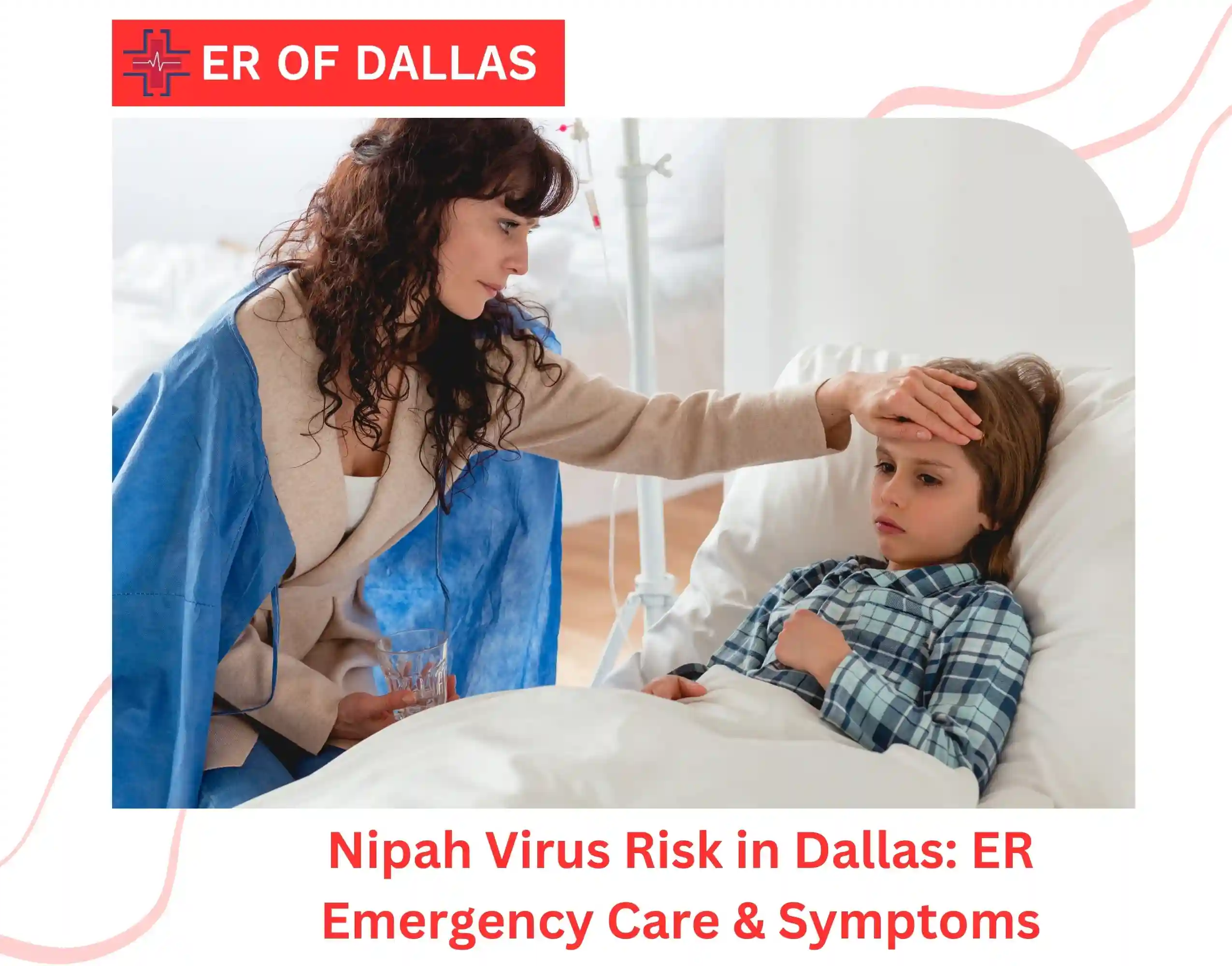
As of now, there are no confirmed cases of Nipah virus in Dallas or anywhere in the U.S. According to the World Health Organization’s latest global assessment, the risk of Nipah spreading beyond current regions such as India and Bangladesh remains low.1
Even so, emergency departments remain prepared to respond to Nipah virus risk in Dallas. Staying safe is a shared responsibility. Nipah virus is a rare but severe infection with a high fatality rate. Public health estimates suggest that about 40% to 75% of infected individuals may die in severe outbreaks.2
Patients can develop brain inflammation (encephalitis), that may progress to a coma within 24 to 48 hours. That’s why awareness matters. Let’s see what Nipah is, how it spreads, what symptoms to watch for, and when to go to the emergency room.
What Is the Nipah Virus?
Nipah virus is a zoonotic (animal-to-human) virus first identified in 1999 in Malaysia. Since then, most outbreaks have happened in Malaysia, the Philippines, Bangladesh, India, and Singapore. The fruit bats that carry the Nipah virus are found throughout Asia, the South Pacific, and Australia.
What Are the Symptoms of Nipah Virus?
- Fever
- Headache
- Myalgia (muscle aches)
- Sore throat
- Cough
- Fatigue
Red Flag Symptoms:
- Respiratory symptoms: severe cough, shortness of breath
- Neurological decline: altering mental status, confusion, drowsiness, seizures
- Encephalitis (brain swelling): the life-threatening complication
How Nipah Virus Causes Brain Swelling (Encephalitis)

Nipah virus can directly infect the brain. It enters the bloodstream and crosses the blood–brain barrier that keeps harmful substances out of the brain. It starts infecting brain cells and blood vessel lining cells. The body’s immune system reacts aggressively to fight the virus.
This immune response causes inflammation and fluid buildup in brain tissue. The pressure increases because there’s no room for swelling inside the skull. It leads to:
- Confusion
- Drowsiness
- Seizures
- Coma in severe cases within 24-48 hours
How Long Does it Take for Nipah Virus Signs to Show
People with Nipah usually start getting sick within 4 to 14 days after they are infected with the virus.
Nipah Virus Risk in Dallas: How Does Nipah Spread?
Nipah can spread through:
- Direct contact with infected animals, fruit bats, or pigs.
- Food contaminated by bats (raw date-palm sap is a classic example in Bangladesh).
- Close contact with an infected person, exposure to respiratory droplets, or body fluids. The person-to-person spread of Nipah is rare.
- It does not spread as easily as common respiratory viruses and usually requires close, prolonged contact.
Nipah Virus Risk in Dallas: Why the Nipah Global Spread Risk Is Low
Outbreaks of Nipah historically stay limited to specific regions. They do not explode into global pandemics. That’s because nipah does not spread through shared air like other respiratory viruses. It requires close, prolonged contact with the bodily fluids of an infected person.
Many cases have been linked to close contact with infected animals or consuming contaminated foods (for example, raw date palm sap contaminated by bats). But Nipah is making headlines because it has a higher fatality rate. Nipah virus risk in Dallas is low, but we are prepared.
What Happens If Someone Comes to Our ER With a Suspected Nipah Virus?
In today’s world of international travel, illnesses can cross borders. That’s why ER Dallas stays prepared for Nipah virus risk in Dallas. If you recently traveled to a country with active Nipah cases and then developed symptoms, reach out to the emergency room immediately. Here’s what we would do:
- Immediate Isolation: If Nipah is suspected, the patient is placed in a private room. Our staff dons PPE (gloves, gowns, eye protection, and respiratory protection such as N95 respirators).
- Rapid Medical Assessment: Our emergency team checks: airway, breathing, oxygen levels, blood pressure, and mental status.
- Restores Breathing: If breathing is compromised, we provide oxygen; in severe cases, non-invasive ventilation.
- Testing and Public Health Coordination: There is no quick in-house test for the Nipah virus. If we suspect it, we notify public health authorities. Samples are sent to designated laboratories. While waiting for confirmation, we continue supportive treatment.
- Imaging and Supportive Labs: Chest X-ray/CT if respiratory disease suspected; routine labs to monitor organ function; management of seizures if present.
Nipah Virus Risk in Dallas: Emergency Treatments and Supportive Care
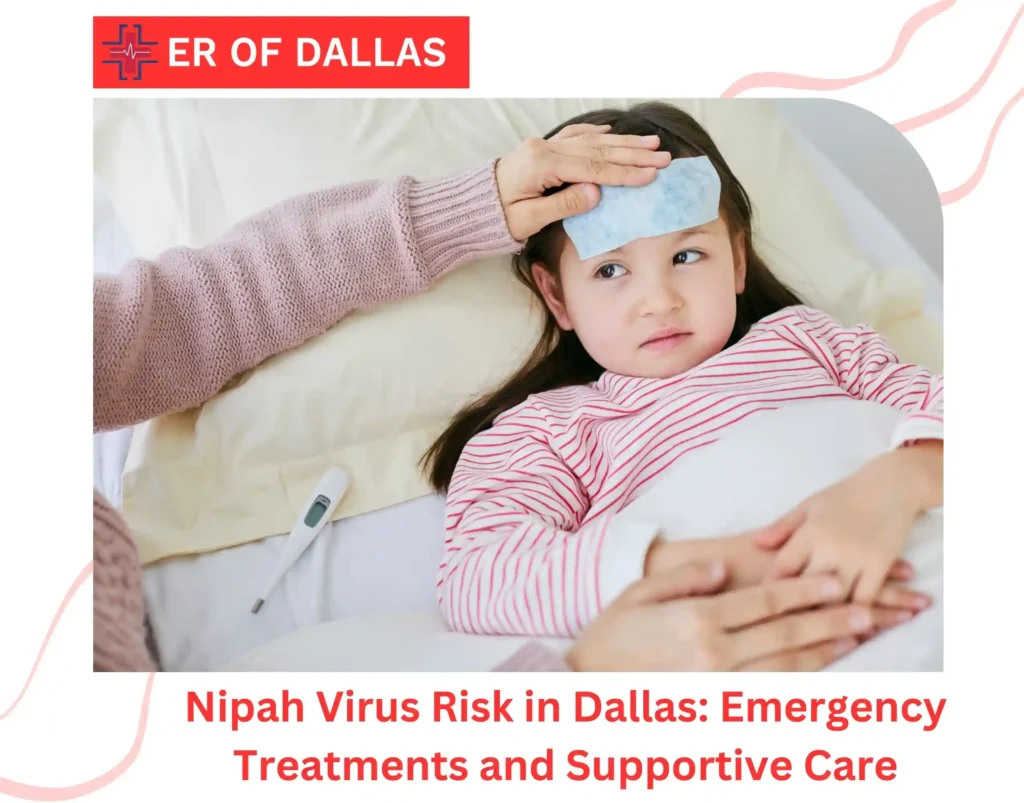
Currently, there is no approved antiviral medication specifically for the Nipah virus. Treatment focuses on supportive care, including:
- Oxygen therapy for hypoxemia; advanced respiratory support (intubation/ventilation) if respiratory failure occurs.
- Fluid management and hemodynamic support for shock.
- Seizure control with standard anticonvulsants.
- Management of encephalitis in an ICU setting when required (neuro-critical care).
- Treatment of secondary infections and complications as they arise.
Nipah Virus Risk in Dallas: Practical Advice for Dallas Residents
- While traveling to endemic areas, avoid raw date-palm sap and other fresh products that might be contaminated by bats.
- Avoid contact with bats and sick animals, practice good hand hygiene. Avoid close contact with sick people.
- If you have relevant travel and develop fever + respiratory or neurological symptoms, seek emergency.
- Don’t forget to mention your travel/exposure during triage.
Nipah Virus Risk in Dallas: Our Commitment to Dallas
Headlines about the Nipah virus feel alarming, but for Dallas residents, the immediate risk remains very low at this time. If cases were ever to appear, our emergency room in Dallas is prepared to treat them early and keep our community safe.
If you notice symptoms or think you’ve been in close contact with someone who had Nipah virus, seek care at the nearest emergency department.
At ER Dallas, we’re equipped and ready for the Nipah virus risk in Dallas. If you have questions about symptoms or need emergency care, we’re here for you 24/7.
FAQs
1. Is the Nipah virus like COVID?
No. Nipah virus is rare and does not spread easily in general community settings. COVID-19 spreads easily from person to person and led to a global pandemic. Nipah, though rare, is more severe in confirmed cases.
2. What are the early symptoms of the Nipah virus?
Early symptoms usually include fever, headache, muscle aches, sore throat, cough, and fatigue. These can look similar to the flu or other common viral illnesses.
3. When should I go to the emergency room?
You should seek emergency care if you have a high fever with trouble breathing, confusion, seizures, or sudden changes in alertness.
4. Is there a treatment or cure for the Nipah virus?
There is no specific antiviral cure yet. Treatment focuses on supportive care.
How are emergency rooms prepared for Nipah virus risk in Dallas?
Our ER teams follow strict infection control protocols, including isolation procedures and protective equipment. We also coordinate closely with public health authorities if a suspected case appears.