Gastritis is inflammation of the stomach lining, often triggered by bacterial infection, painkiller overuse, alcohol, or chronic stress. Most people know the hallmark signs: burning in the upper abdomen, nausea, bloating. Fewer connect gastritis symptoms back pain to their digestive system.
The stomach shares nerve pathways with the upper spine. When the lining becomes inflamed, pain signals can travel these shared routes and manifest in the back instead. Doctors call this referred pain. It’s why gastritis symptoms back pain so often gets mistaken for a muscle problem, leading people to treat the wrong condition entirely.
Can Gastritis Cause Back Pain?
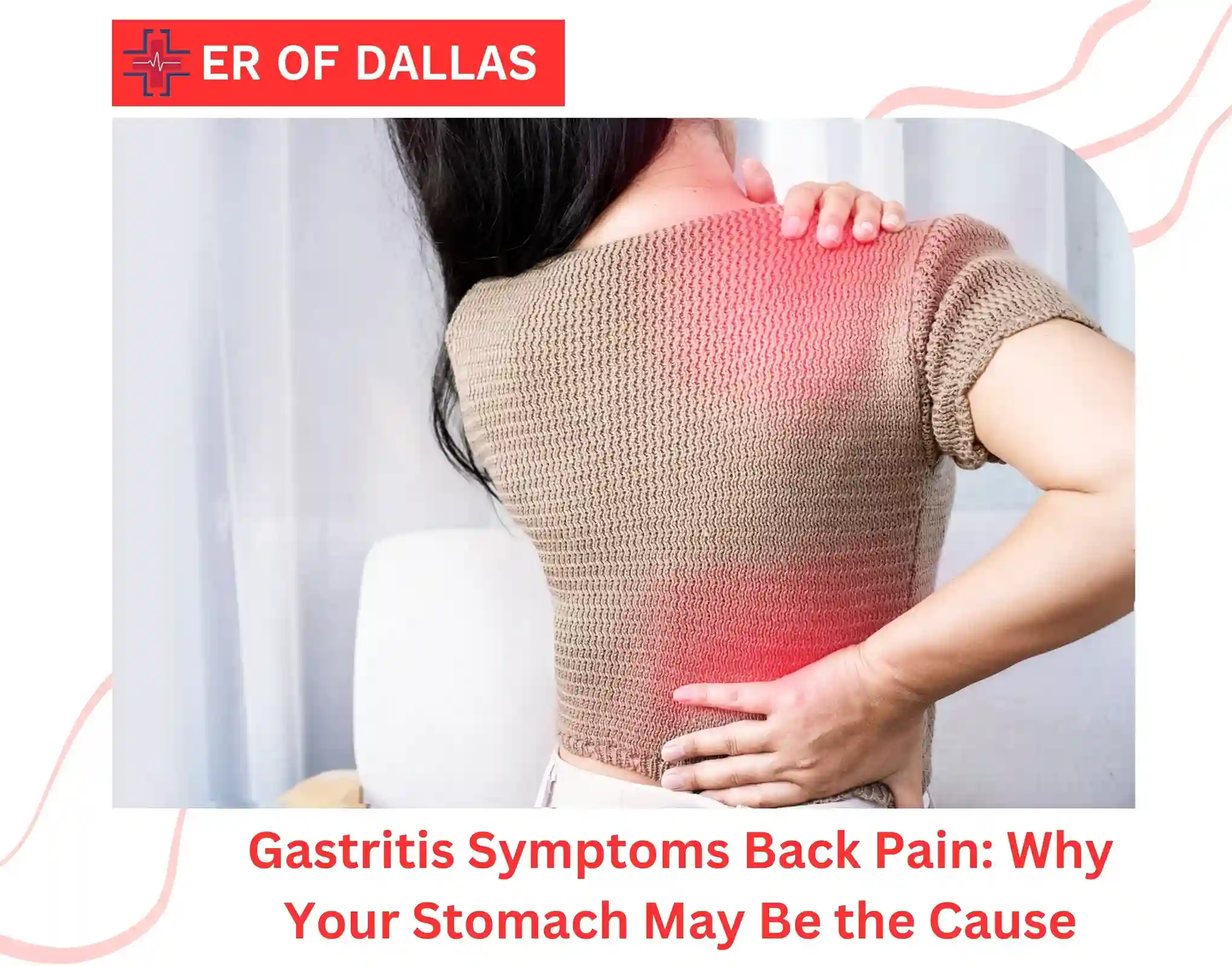
Yes. Gastritis can cause back pain, typically felt in the upper back between the shoulder blades. The stomach and upper spine share nerve pathways. When inflammation irritates the stomach lining, pain signals travel these routes. The brain sometimes misreads the signal’s origin, interpreting stomach pain as back pain.
This phenomenon, called referred pain, is common with digestive conditions. The stomach sits close to the spine, separated only by a thin layer of tissue and muscle. Inflammation doesn’t stay neatly contained. It spreads to nearby nerve bundles that also serve the mid-back region.
The location is telling. Gastritis back pain almost always strikes the upper or middle back. Lower back pain rarely connects to stomach inflammation. If you feel stomach pain radiating to back areas between the shoulder blades, and digestive symptoms accompany it, gastritis becomes a likely suspect.
What Does Gastritis Back Pain Feel Like?
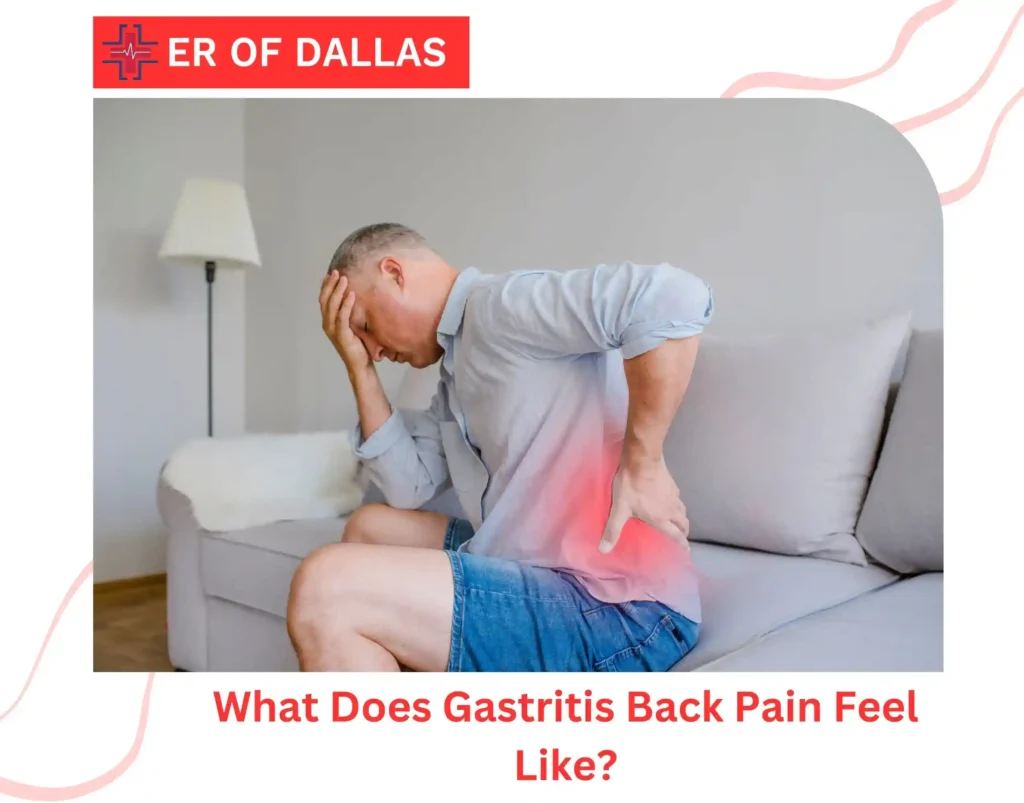
Gastritis back pain feels like a dull, persistent ache in the upper-middle back or between the shoulder blades. The sensation often builds gradually rather than hitting all at once.
Timing offers the biggest clue. Back pain after eating, particularly within 30 to 60 minutes, points toward a digestive origin. This window coincides with peak stomach acid production. Lying flat can intensify the discomfort because gravity no longer keeps stomach contents down.
Gastritis back pain may fluctuate throughout the day. It rarely stays constant. Flare-ups tend to follow meals, stress, or alcohol consumption. Unlike a pulled muscle that hurts with specific movements, gastritis back pain persists regardless of how you sit, stand, or stretch.
How Is Gastritis Back Pain Different From Muscle Pain?
This distinction between gastritis back pain and muscle pain matters because treatment differs entirely. Muscle pain responds to rest, stretching, and anti-inflammatory medications, while gastritis back pain does not. Taking ibuprofen for what you think is a sore back can actually worsen gastritis, since NSAIDs irritate the stomach lining.
| Factor | Gastritis Back Pain | Muscular Back Pain |
| Location | Upper back, between shoulder blades | Anywhere along the spine, often lower back |
| Trigger | Eating, empty stomach, lying down | Movement, lifting, prolonged posture |
| Character | Dull, gnawing, burning | Sharp, tight, or spasm-like |
| Associated symptoms | Nausea, bloating, stomach burning | Stiffness, tenderness to touch |
| What helps | Antacids, eating small meals | Rest, stretching, heat/ice |
If your back pain comes with any digestive symptoms, or if it follows a pattern tied to meals rather than movement, consider gastritis as the source.
What Other Symptoms Appear With Gastritis Back Pain?
Back pain from gastritis rarely shows up alone. The stomach announces itself in other ways too.
- Upper abdominal discomfort is the most common companion. This can range from mild burning to intense gnawing pain just below the ribcage. Many describe it as feeling “raw” inside.
- Nausea affects most people with active gastritis. It may come in waves, often peaking after meals or when the stomach sits empty too long.
- Bloating and early fullness make eating uncomfortable. A few bites may leave you feeling stuffed. This happens because an inflamed stomach struggles to expand normally.
- Loss of appetite follows naturally. When eating causes discomfort, the body loses interest in food.
Warning signs that need attention:
- Vomiting blood or material that looks like coffee grounds
- Black, tarry stools
- Unexplained weight loss
- Severe pain that doesn’t ease
These suggest bleeding or ulceration and require prompt evaluation.
What Causes Gastritis to Radiate Pain to the Back?
Several conditions trigger gastritis. Each one inflames the stomach lining, and any of them can produce referred back pain.
- pylori infection tops the list. This spiral-shaped bacterium burrows into the stomach lining, causing chronic inflammation. Roughly half the world’s population carries H. pylori, though not everyone develops symptoms. When they do, back pain is an underrecognized presentation.
- NSAID overuse ranks second. Aspirin, ibuprofen, and naproxen reduce the stomach’s protective mucus layer. Regular use, especially without food, leaves the lining vulnerable to acid damage. The irony is sharp: many people take these drugs for back pain, unknowingly creating gastritis that causes more back pain.
- Alcohol directly irritates stomach tissue. Heavy drinking or binge episodes can trigger acute gastritis within hours. The inflammation spreads quickly, and back pain may develop before obvious stomach symptoms appear.
- Stress doesn’t cause gastritis directly, but it amplifies acid production and slows healing. Chronic stress paired with other risk factors accelerates damage.
- Autoimmune gastritis occurs when the immune system attacks stomach cells. This form tends to be chronic and may cause vitamin B12 deficiency alongside digestive symptoms.
Not everyone with gastritis develops back pain. Individual anatomy, the severity of inflammation, and the specific location of stomach damage all influence whether referred pain from stomach to back occurs.
When Should You Worry About Gastritis Back Pain?
Most gastritis symptoms back pain resolve with dietary changes and over-the-counter remedies. But certain symptoms signal something more serious.
Seek emergency care if you experience:
- Vomiting blood, whether bright red or resembling coffee grounds
- Black or tarry stools, which indicate bleeding in the digestive tract
- Severe abdominal pain that comes on suddenly and keeps intensifying
- Dizziness, rapid heartbeat, or pale skin (signs of significant blood loss)
- Rigid abdomen that feels hard to the touch
- Pain interferes with sleep or daily activities
- Fever with back pain or severe stomach pain
These can indicate a bleeding ulcer, perforation, or other complications that require immediate attention. The emergency room can perform blood work and imaging to assess the situation quickly.
How Is Gastritis Diagnosed When Back Pain Is Present?
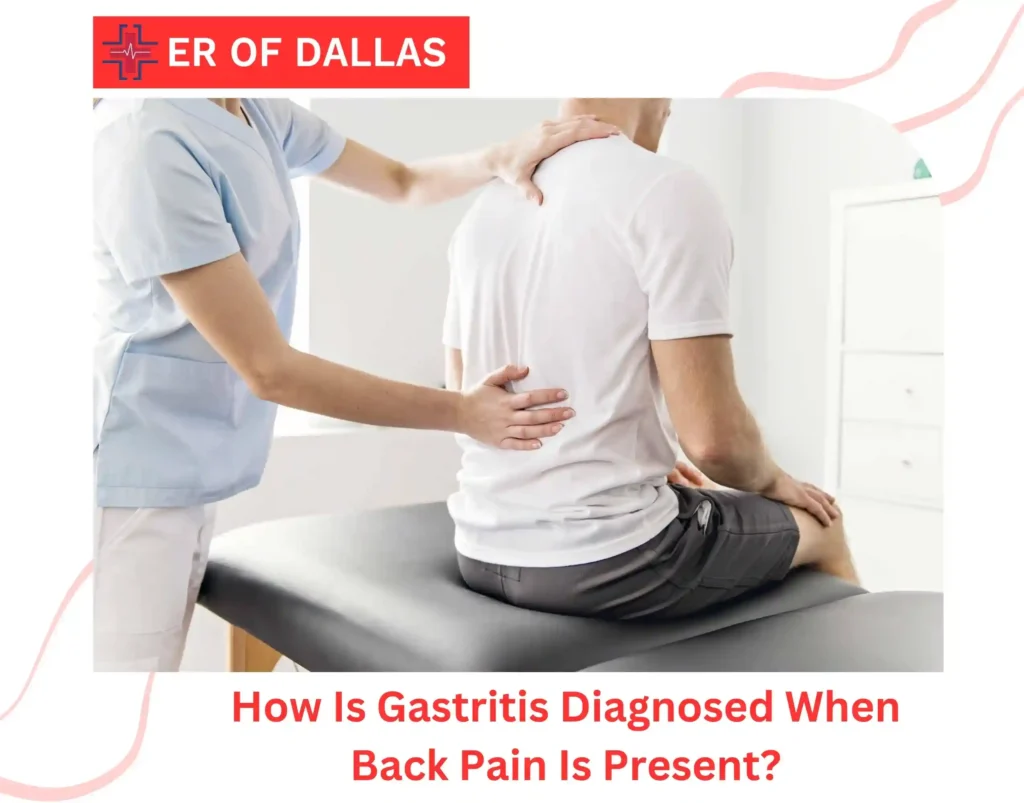
Doctors use several approaches to confirm gastritis when back pain is part of the picture.
- Medical history comes first. Your physician will ask about pain timing, eating patterns, medication use, and alcohol consumption. The relationship between meals and back pain often points toward a digestive cause.
- Physical examination checks for abdominal tenderness, particularly in the upper region. Pressing on the stomach area may reproduce or worsen symptoms.
- Blood tests detect H. pylori antibodies, signs of anemia from chronic bleeding, and markers of inflammation.
- Stool tests identify H. pylori and check for hidden blood that indicates internal bleeding.
- Endoscopy provides definitive diagnosis when symptoms persist or warning signs appear. A thin camera passes through the mouth to visualize the stomach lining directly. Biopsies can rule out more serious conditions.
Emergency rooms can perform blood work and imaging quickly when symptoms suggest complications like bleeding or perforation.
How Is Gastritis With Back Pain Treated?
Treatment targets the stomach, not the back. Once inflammation subsides, referred pain resolves on its own.
- Acid-reducing medications form the foundation. Proton pump inhibitors and H2 blockers lower acid production, giving the stomach lining time to heal. Over-the-counter antacids provide faster but shorter-lived relief.
- Antibiotics become necessary when H. pylori is present. Lab testing confirms the infection, and a combination regimen clears it. Without treating the bacteria, gastritis tends to recur.
- Dietary adjustments support healing. Smaller, more frequent meals prevent the stomach from producing excessive acid at once. Avoiding spicy foods, citrus, caffeine, and alcohol reduces irritation. Some people find that keeping a food diary helps identify personal triggers.
- Lifestyle modifications address contributing factors. Quitting smoking, managing stress, and limiting NSAID use all protect the stomach lining. If you need pain relief for other conditions, discuss alternatives with your doctor.
- When standard treatment fails, further investigation is warranted. Endoscopy allows direct visualization of the stomach lining and can identify ulcers, erosions, or other complications. Biopsies rule out more serious conditions.
Take the Connection Seriously
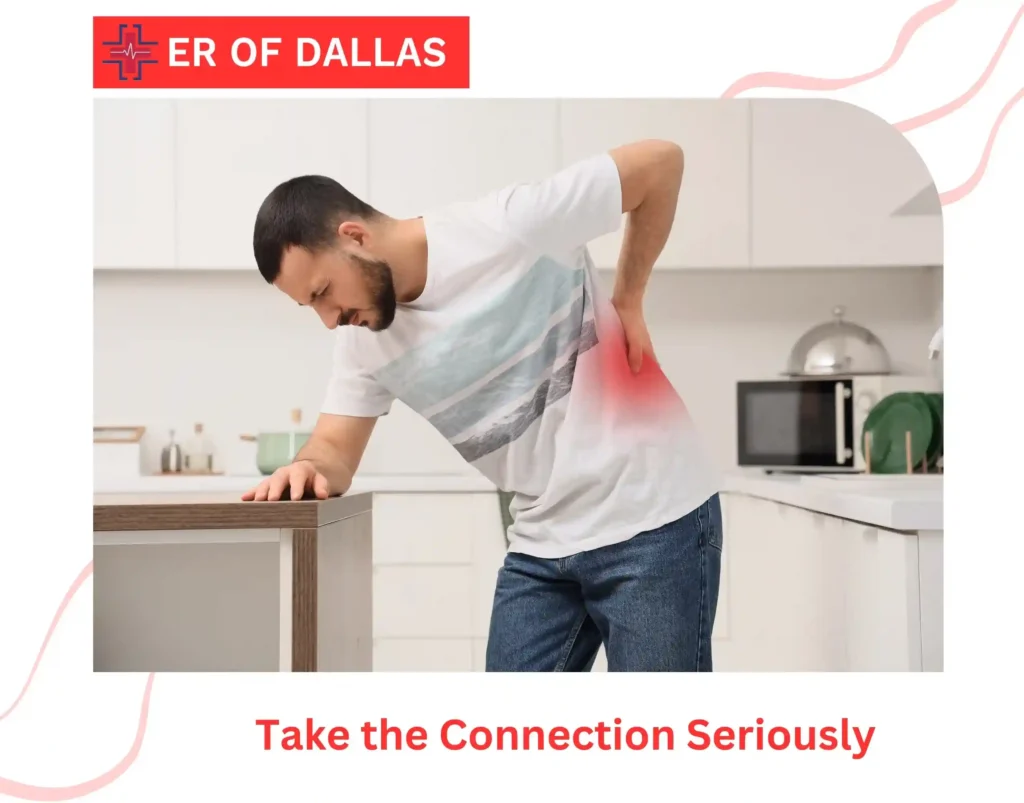
Gastritis symptoms back pain connections are closer than most people realize. When stomach inflammation causes referred pain between the shoulder blades, treating the back alone won???t bring relief. The real solution lies in addressing the underlying stomach issue.
Pay attention to patterns. If your upper back pain from stomach problems follows meals, worsens when lying down, or arrives with digestive symptoms, gastritis deserves consideration. Most cases respond well to treatment, but persistent or worsening symptoms should be evaluated promptly.
ER of Dallas is open 24/7, with on-site labs and diagnostic imaging available to assess your pain and rule out more serious complications.
FAQs
1. Can gastritis cause back pain on both sides?
Yes. Gastritis commonly causes bilateral upper back pain because the stomach sits centrally in the abdomen. Inflammation irritates nerve pathways serving both sides of the spine. One-sided pain is possible but less typical.
2. How long does gastritis back pain last?
Duration depends on the underlying cause and treatment. Acute gastritis may resolve within a few days to two weeks once you remove the trigger and begin treatment. Chronic gastritis can cause intermittent back pain for months if the root cause goes unaddressed.
3. Can gastritis cause back pain at night?
It can. Lying flat allows stomach acid to pool and irritate inflamed tissue more easily. Many people with gastritis notice that back pain and stomach discomfort worsen at night or early morning when they’ve gone hours without eating.
4. Can gastritis cause back pain without stomach symptoms?
Occasionally, yes. Some people experience referred back pain before noticeable digestive symptoms develop. This is more common with acute gastritis from alcohol or NSAIDs, where inflammation builds quickly. However, most cases eventually present with nausea, bloating, or abdominal discomfort alongside the back pain.
5. Does gastritis back pain come and go?
Typically, yes. The pain fluctuates with eating patterns, stress levels, and flare-up cycles. You might have several good days followed by a painful episode, especially after dietary indiscretion or missed medication.
6.Can GERD cause back pain too?
GERD (gastroesophageal reflux disease) and gastritis share overlapping symptoms, including referred back pain. GERD primarily affects the esophagus, so pain may radiate higher, sometimes mimicking cardiac discomfort. Both conditions involve excess acid and respond to similar treatments.